AI FOR DESIGNERS
Designed Anchor, a financial wellness app for users with variable income, using AI as a critical design partner from research to prototype

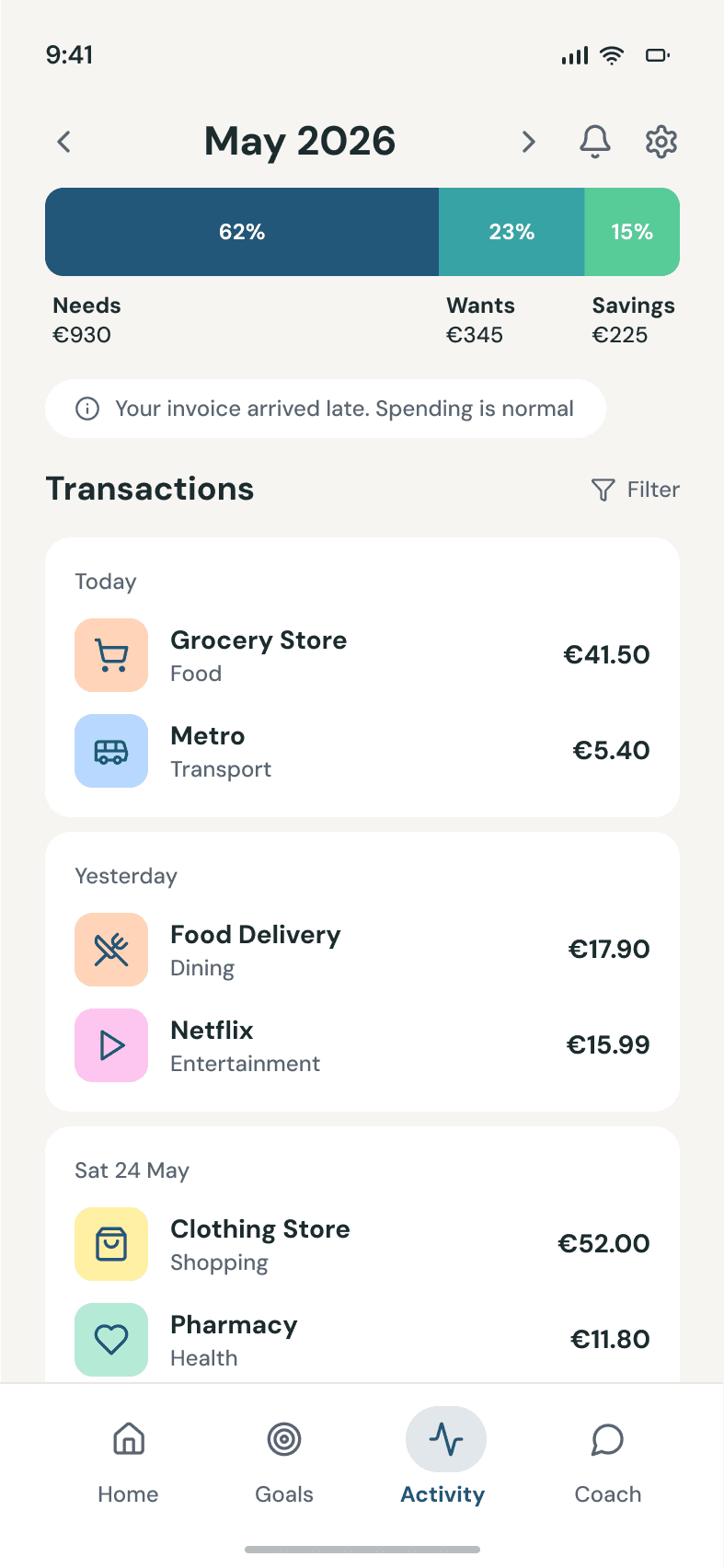

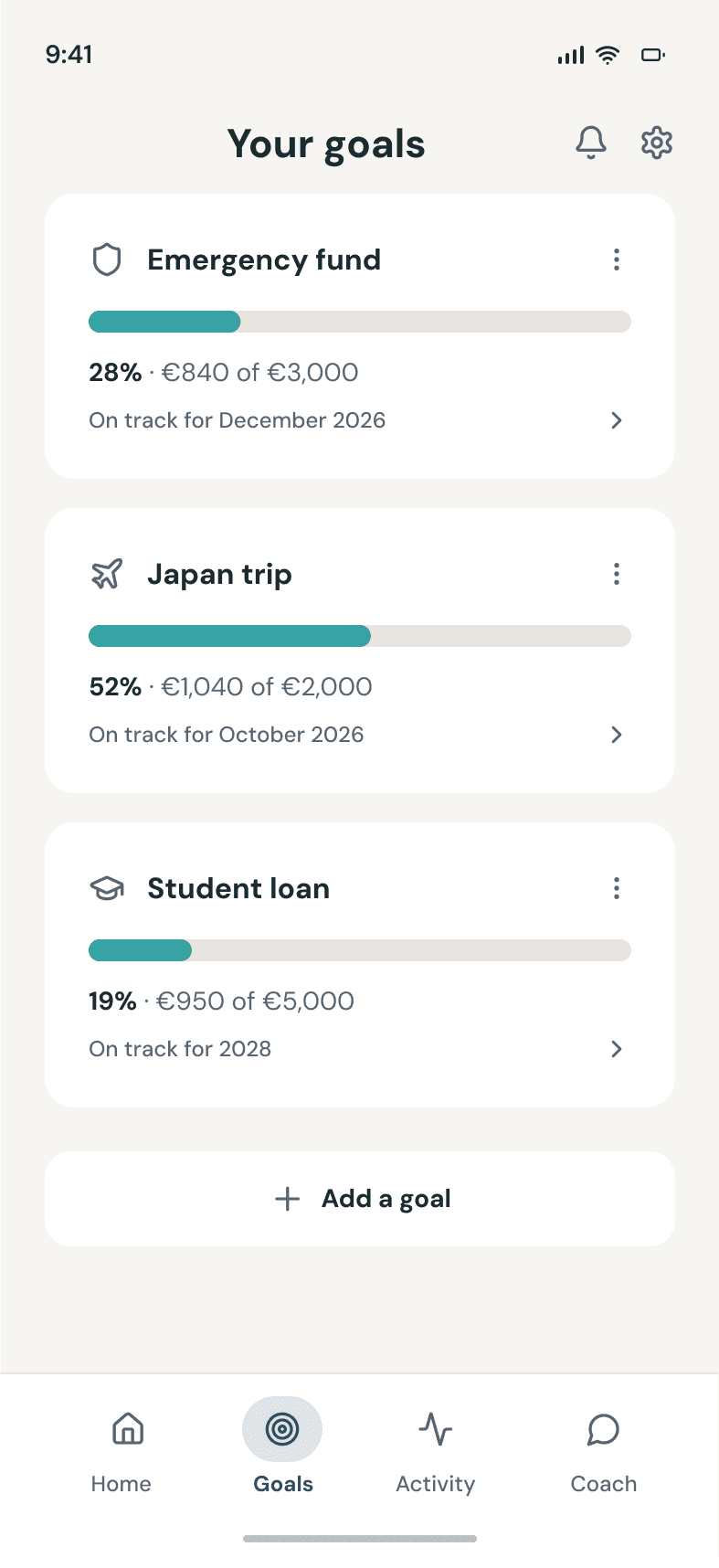
Anchor is a mobile financial wellness app for young adults with variable income. It replaces financial anxiety with two things: one clear number showing what is safe to spend today, and one personalised action to take next. This project was developed as part of the IxDF AI for Designers course. AI was used as an active thinking partner throughout the design process - surfacing research, pressure-testing decisions, generating wireframes, and evaluating the final screens. Every output was critically reviewed, and where AI recommendations did not hold up, they were rejected with documented reasoning.
Timeline
4 weeks
Tools
Claude | ChatGPT | Figma Make | ClarityUX | Figma Design
Competitive Analysis
YNAB, Monarch Money, and Rocket Money all assume stable monthly income. None is built for variable pay. Variable income was an afterthought, not a foundation.
Key Insights
Gen Z and Millennials show the highest likelihood of switching financial providers when a product does not fit their lives (Deloitte, 2026). Engagement is high, but loyalty is conditional. The window for a product that genuinely fits this user's reality is open.
User Persona
A young adult in their late twenties, freelance or variable-income, digitally confident and financially motivated, but chronically uncertain about their monthly position. Previously tried budgeting apps and abandoned them, not from lack of discipline, but because the tools assumed a financial stability they did not have. Every design decision was tested against one question: Does this work when income is unpredictable?
Problem Statement
Young adults with inconsistent incomes are failed by budgeting apps that assume financial stability: tools are either too rigid or too passive, leaving users informed about their money but never empowered to change it.
HMW's
How might we design a budget that adapts to irregular income in real time?
How might we balance automation with user agency?
How might we turn financial data into one clear next action?
How might we deliver guidance at the exact moment a financial decision is being made?
Feature Selection
Safe-to-Spend Dashboard answers the question the user asks every day: How much can I actually spend right now? One Next Step answers what follows: What should I do about it?
Wireframing
Six core screens were defined before any visual work began. UX logic, content hierarchy, and interaction states were written out in full before being translated into structured prompts for Figma Make. Multiple amendment cycles were required, including a full audit of financial data coherence across the home screen, to ensure every number held up as a connected system.


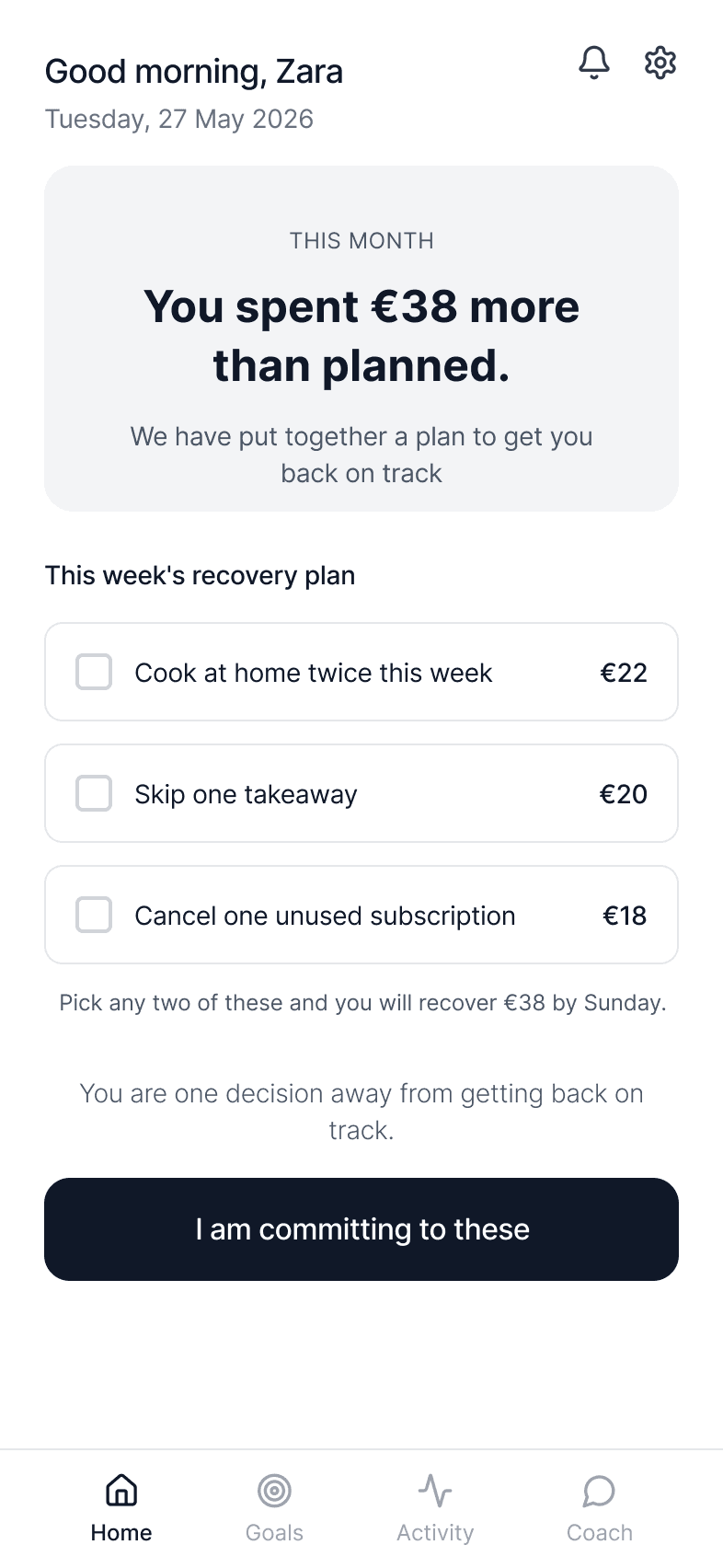
mid-fi wireframes
Safe-to-Spend Dashboard
Standard apps budget against expected income. When a payment arrives late, the budget breaks. Anchor sets the Safe-to-Spend number from the user's floor income - the minimum they can reliably count on. The worst case is planned for from day one, and no leading competitor has made this decision.
One Next Step
Every app in this category shows users what happened to their money. None tell them what to do next. One personalised recommendation per session, connected to the user's goals and current position, reduces the paralysis that comes from too much information and too little direction. When the user overspends, the card routes them to a recovery plan where any two of three specific actions cover the shortfall. The CTA appears only after two are selected.
Evaluation

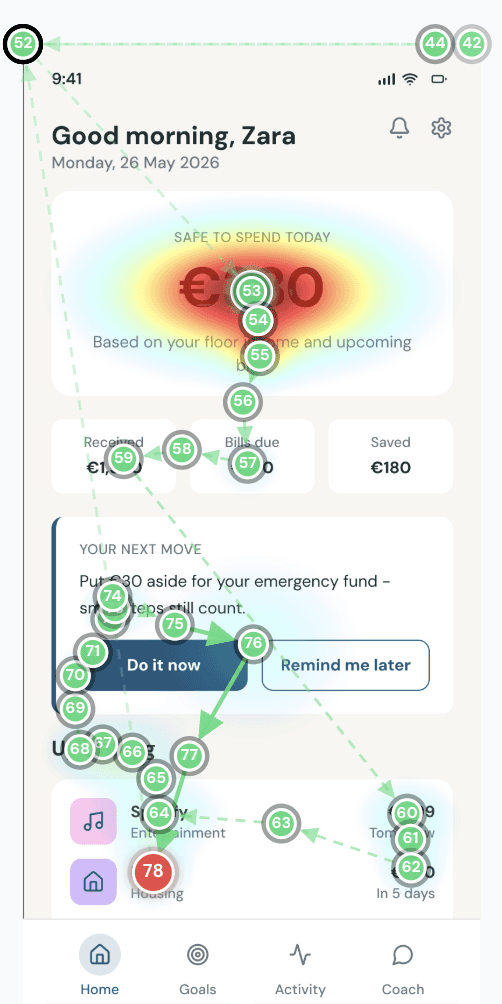

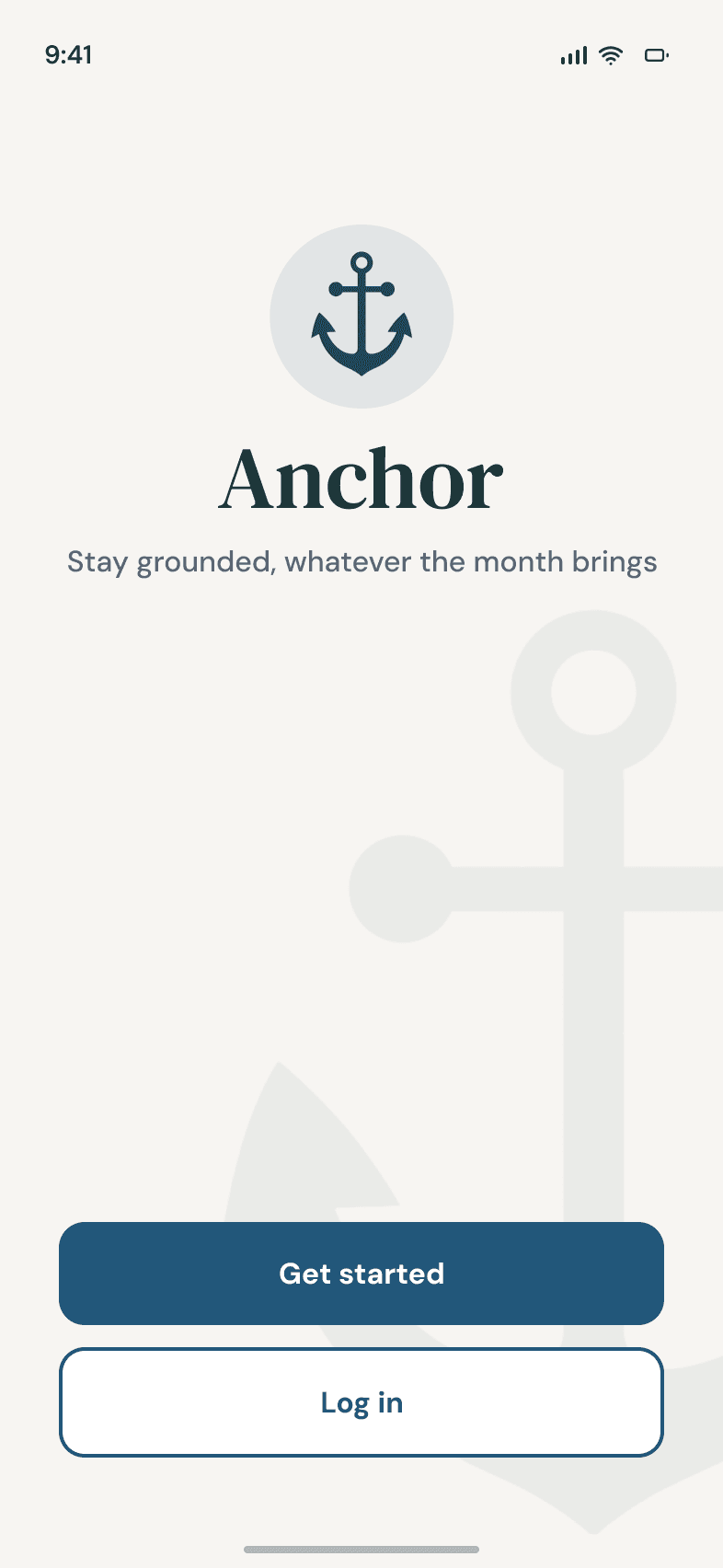

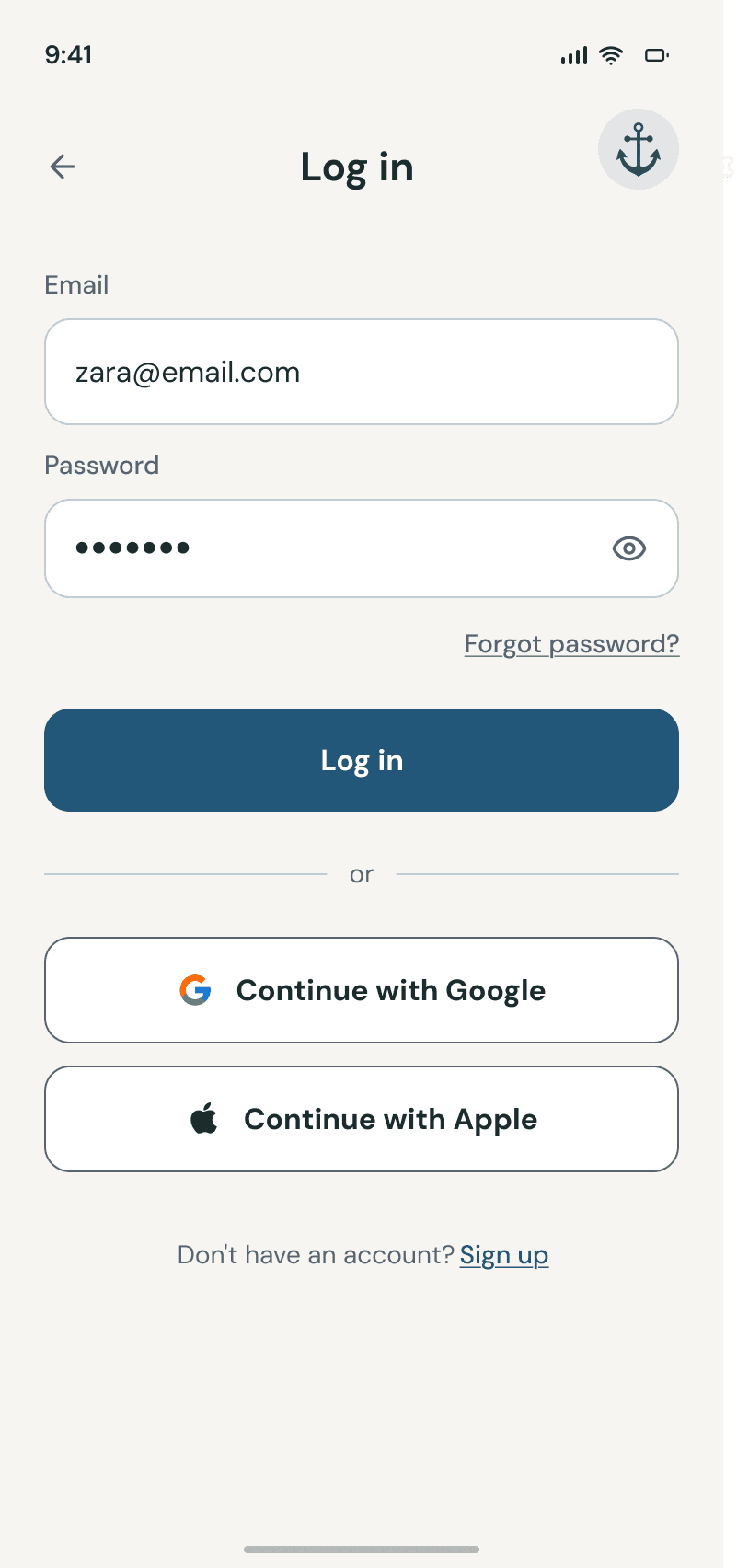
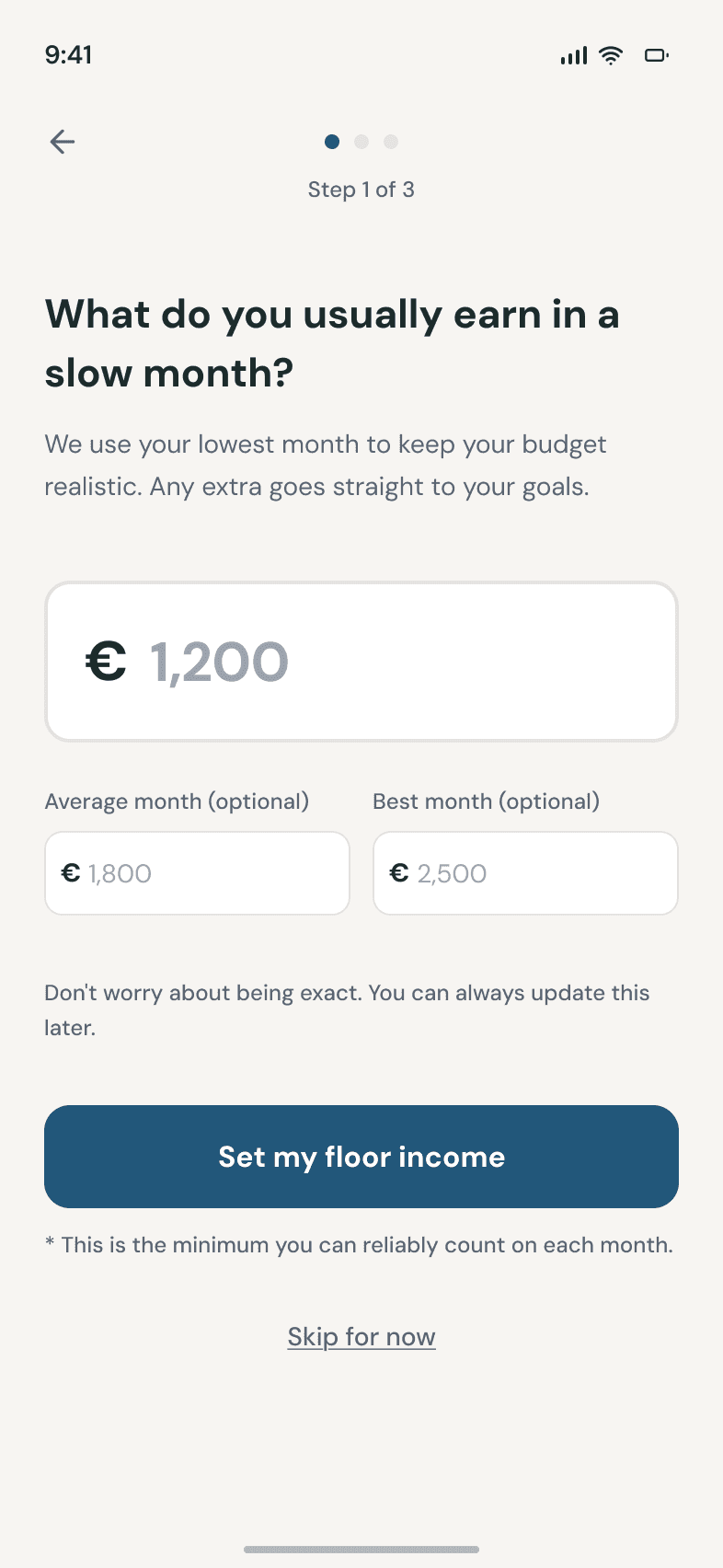
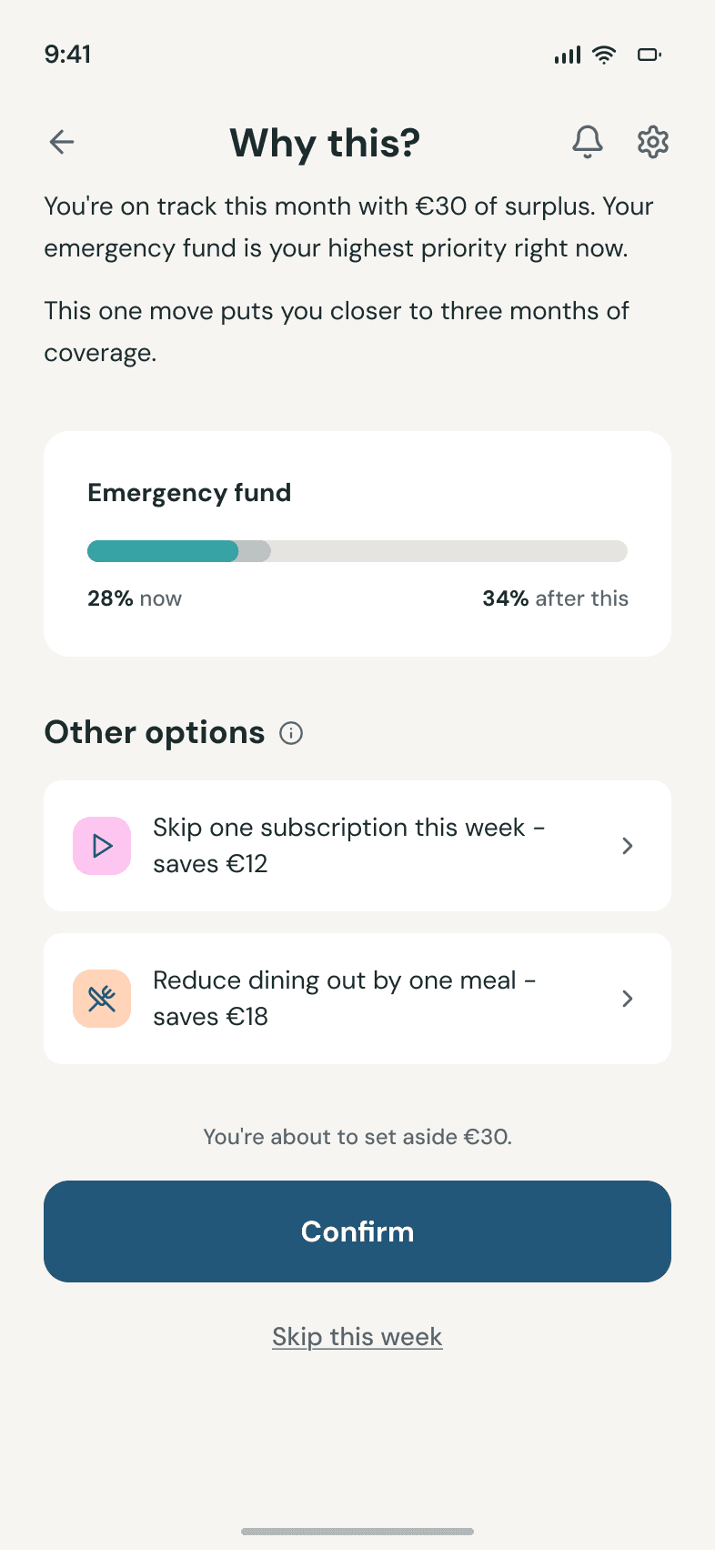
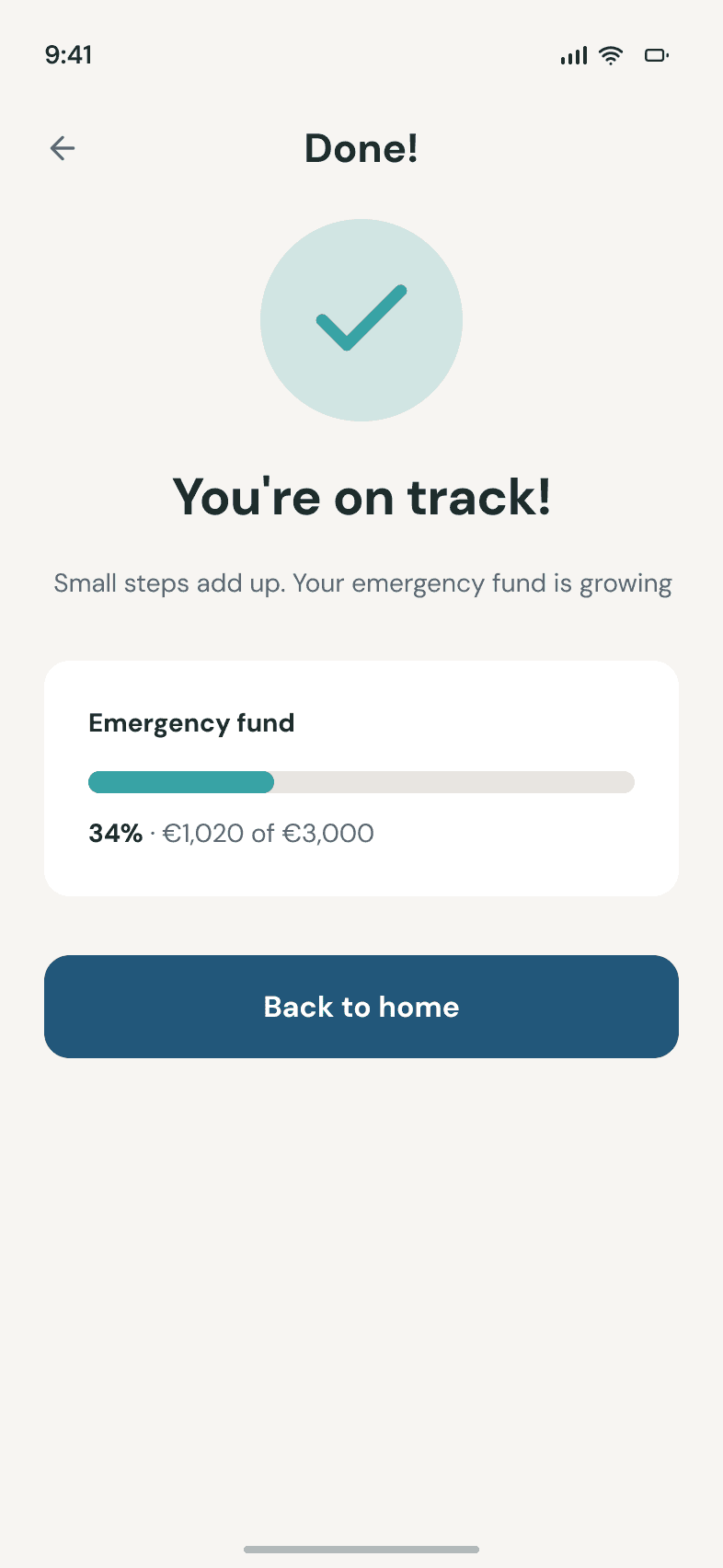
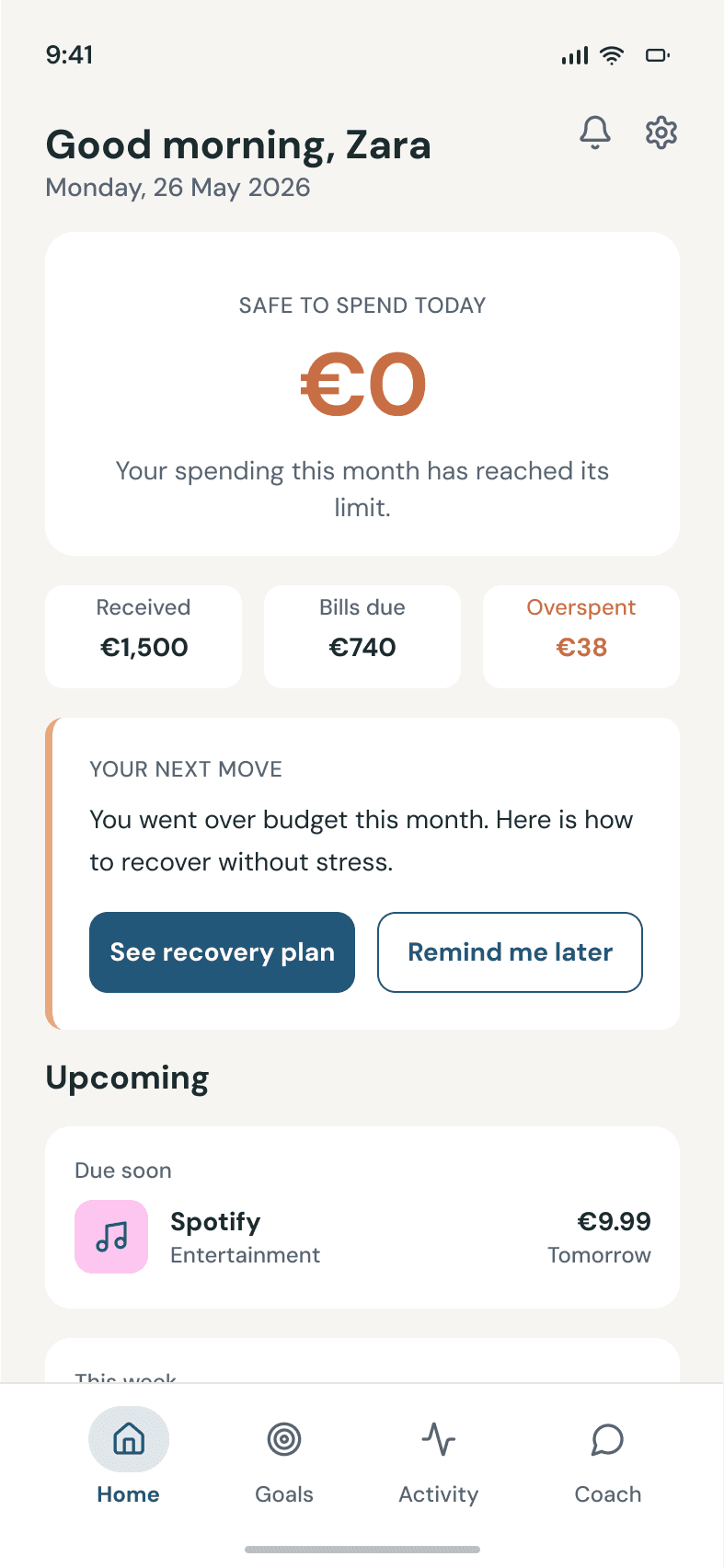
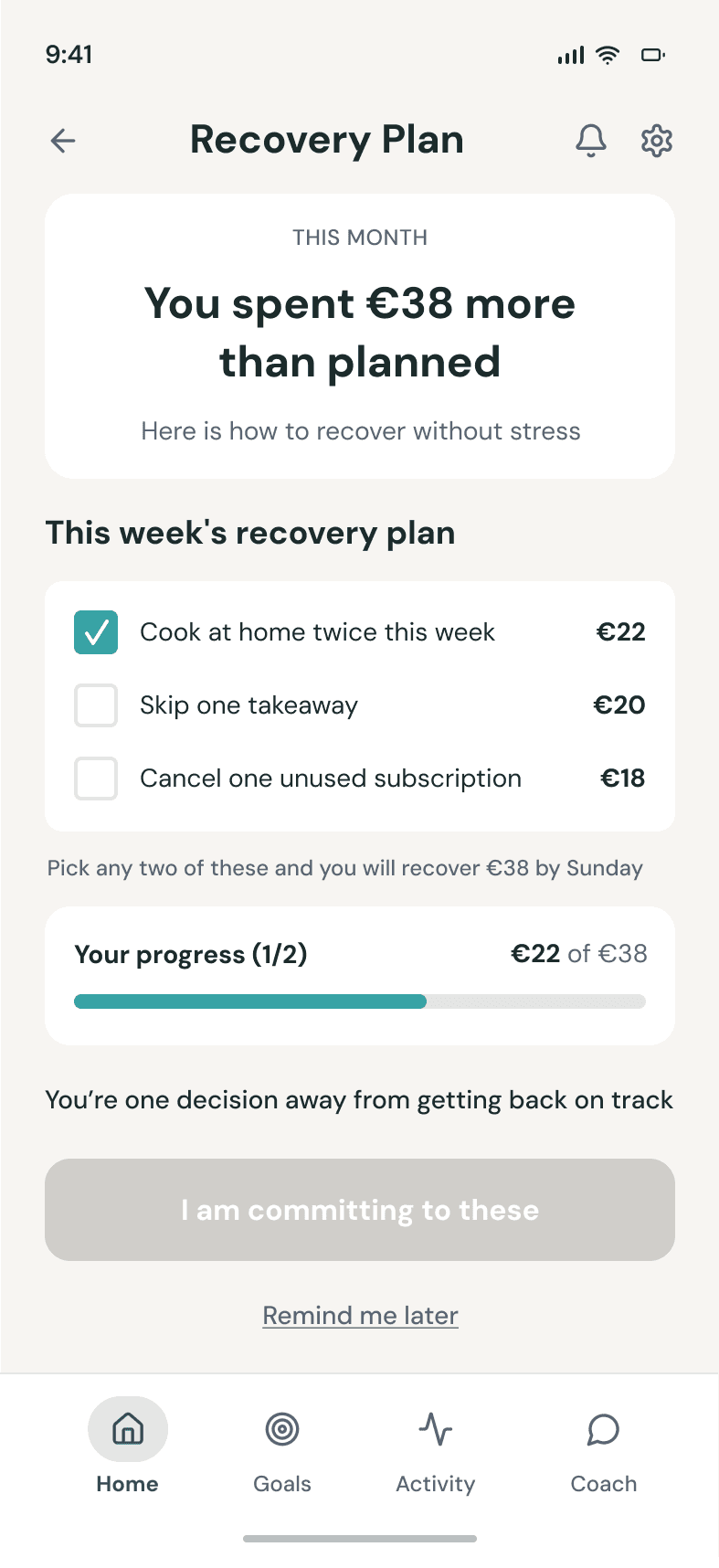
Anchor demonstrates that a focused, AI-assisted process can produce a coherent and differentiated fintech product without a large research team or an extended timeline. The project translated a clearly identified gap - no leading budgeting tool built for variable income - into two features with a solid logical foundation, a complete set of high-fidelity screens, and a documented iteration cycle driven by AI evaluation tools reviewed critically at every stage.
Success for this product would be measured through Safe-to-Spend engagement rate, One Next Step action completion rate, recovery plan conversion, and 30-day retention.
Challenges
The hardest part was designing for a financial reality that existing products had not meaningfully addressed. Generic budgeting logic broke constantly against variable income constraints and had to be rebuilt around this user's specific context at every stage.
Also, no primary user research was conducted within the scope of this project. Every decision was grounded in published research and critical evaluation, but real user validation cannot be replaced, and it remains the essential next step to test these decisions in practice.
Learnings
AI accelerated research and helped surface patterns quickly. On design decisions, it needed to be challenged consistently. The feature selection process is a clear example: following the AI recommendation directly would have produced a weaker product. The value of AI in a design process is proportional to the designer's ability to evaluate its output critically. Without a strong foundation in UX, it is easy to build something that looks right but does not hold up.
Future Considerations
The immediate next step is moderated usability testing with freelance users to validate the floor budget concept and the recovery flow, and to surface friction before further iteration.